Every year on October 27, cat lovers celebrate National Black Cat Day — a day dedicated to the most misunderstood cats in the shelter system. It was launched in 2011 by Cats Protection, the UK’s leading feline welfare charity, after their research showed that black and black-and-white cats were waiting significantly longer to be adopted than cats of other colours. The date was chosen deliberately: just before Halloween, when centuries-old superstitions about black cats are at their peak. The campaign flips that narrative — from fear to celebration.
Fifteen years on, the day is marked worldwide with hashtags like #NationalBlackCatDay and #AdoptBlackCats, and the message is simple: colour doesn’t determine personality. Here are seven myths that still follow black cats around — and what the evidence actually says.
Myth 1: Black cats bring bad luck
This one depends entirely on where you live. In the UK and Scotland, a black cat crossing your path is traditionally a sign of good luck. In Japan, black cats are believed to bring prosperity — some shops display black cat figurines to attract wealth. British sailors once kept black cats aboard for safe passage, and in parts of English folklore, giving a black cat to a bride symbolised happiness and prosperity.
The “bad luck” version is a cultural accident, not a feline trait. A cat’s coat colour has no mechanism for influencing your fortune — but it has somehow influenced shelter outcomes for centuries.
Myth 2: Black cats are witches’ familiars — evil by nature
The witchcraft association traces back to medieval Europe, and it got an official stamp on June 13, 1233, when Pope Gregory IX’s decree Vox in Rama branded the black cat an incarnation of Satan. At the time, the Church was the single greatest authority in Europe — so one line in a church document shaped how an entire continent saw black cats for the next eight centuries.
That’s a branding problem, not a biology problem. Nothing about a black cat’s behaviour was ever part of the charge.
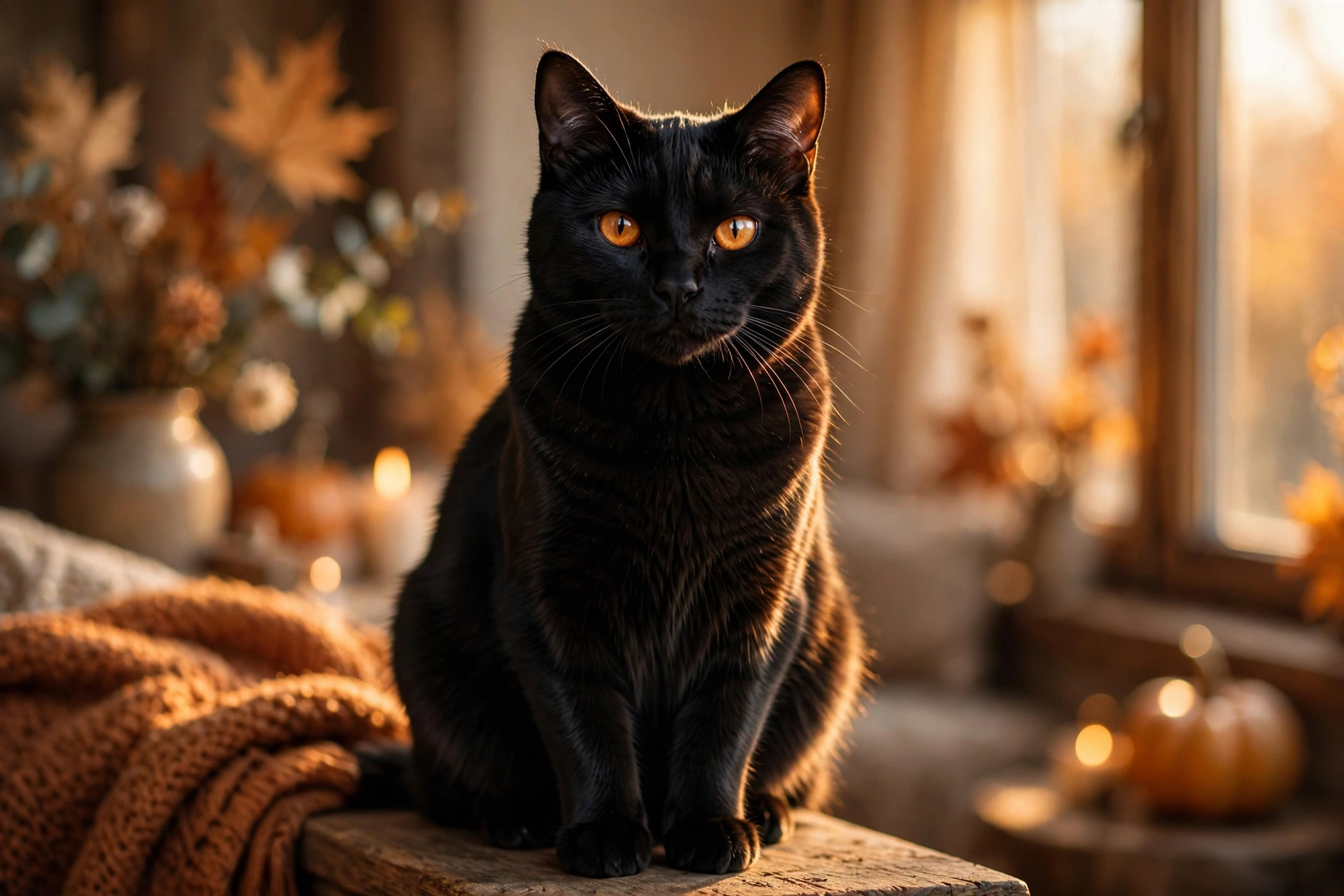
Myth 3: Black cats are less friendly or more aggressive
There is no scientific evidence that black cats differ behaviourally from cats of other coat colours. What does differ is human perception: in one widely cited study, people rated black cats as less friendly, more aggressive, and less adoptable than other cats — despite no evidence of any behavioural difference. Friendliness is one of the traits adopters value most, so that perception gap alone steers people away.
Ask shelter volunteers and foster carers, and you’ll hear the opposite story: black cats are routinely described as affectionate, playful, and full of character. The data says the “aloof black cat” is in the viewer’s head, not in the cat.
Myth 4: Black cats all look the same — boring
Spend time with black cats and this one falls apart fast. Many develop a brownish “rusting” tinge in sunlight. Look closely in bright light and you’ll often see faint ghost tabby stripes — the pattern is there, just printed in black on black. Eye colours range from gold to copper to green against the dark coat, which is why black cats photograph like miniature panthers.
They’re not plain. They’re just subtle — you have to look properly.
Myth 5: You can’t get a good photo of a black cat
This is the one myth with a grain of truth — and it’s the most consequential. Dark coats genuinely are harder to photograph: features wash out, eyes disappear into shadow, and dim shelter kennels make everything worse. Since shelter listings live or die by their photos, this technical problem quietly becomes an adoption problem.
But it’s a photography problem, not a cat problem. Three fixes that work:
- Shoot in natural window light rather than flash.
- Use a light or contrasting background so the outline reads.
- Focus on the eyes — catchlights in gold or green eyes are what make a black cat photo stop the scroll. Burst mode helps, because the best expressions last half a second.
If you share your black cat online this October 27th, good photos do real work: visibility drives inquiries, and inquiries drive adoptions.
Myth 6: Black cats have more health problems
No evidence for this either. Shelter data shows health outcomes for black cats matching the general cat population — same vet bills, same lifespan expectations, same likelihood of a clean bill of health. If anything, their dark coats hide playground dirt better, which is a small win for everyone.
Myth 7: Black cats are in danger every Halloween
This one deserves care. Some shelters do pause black-cat adoptions around Halloween as a precaution against prank or ritual misuse — but there is no statistical evidence that black cats are harmed more often on Halloween than at any other time of year. The precaution is understandable; the panic is not.
What is genuinely risky on Halloween applies to every cat: open doors, doorbells, costumes, candy, and candles. Keep all cats — black or otherwise — indoors on the night itself. If you want the full checklist, our Halloween safety guide for cats covers the retreat-room setup, the candy to keep out of reach, and the morning-after sweep.
How to celebrate on October 27th
- Thinking of adopting? Visit a shelter and meet the black cats first. Look past the kennel photo — the cat in person is always more than the thumbnail.
- Already share your home with one? Post a photo with #NationalBlackCatDay or #AdoptBlackCats. Every share chips away at the visibility problem.
- Not ready to adopt? Donate to or volunteer with a local rescue — the cats waiting longest are usually the ones who need it most.
- Spoil your shadow. Black cats play just as hard as any other cat: an interactive cat toy ball for self-play, or an automatic cat spinner toy for high-energy evenings. Keep routines steady with a smart pet feeder and fresh, appealing water from a cat water fountain — because the best celebration is a well-cared-for cat.
Final thoughts
Prejudice isn’t limited to humans — it extends to animals, and black cats have carried it for nearly 800 years. National Black Cat Day exists to say the obvious out loud: a black cat is just a cat. One that happens to look like a tiny panther, photographs beautifully once you learn the trick, and has been waiting a little too long for someone to notice.
Browse the toys, feeders, and fountains mentioned above in our shop — and happy Black Cat Day to every shadow with whiskers.