Halloween is the one night of the year when your front door becomes the busiest place in the house. For cats — creatures built around routine, territory, and quiet — that means hours of doorbells, strangers in strange shapes, and new smells everywhere. Most Halloween cat emergencies are preventable with a little planning. Here’s how to set your cat up for a calm night.
1. Keep your cat indoors — all evening
This is the single most important rule. An open front door, repeatedly, for hours, is an escape waiting to happen. Indoor cats that slip out on Halloween face traffic, unfamiliar dogs, and disoriented trick-or-treaters. Keep cats inside from late afternoon until the last visitor leaves, and brief everyone in the household so nobody props the door open “just for a second.”
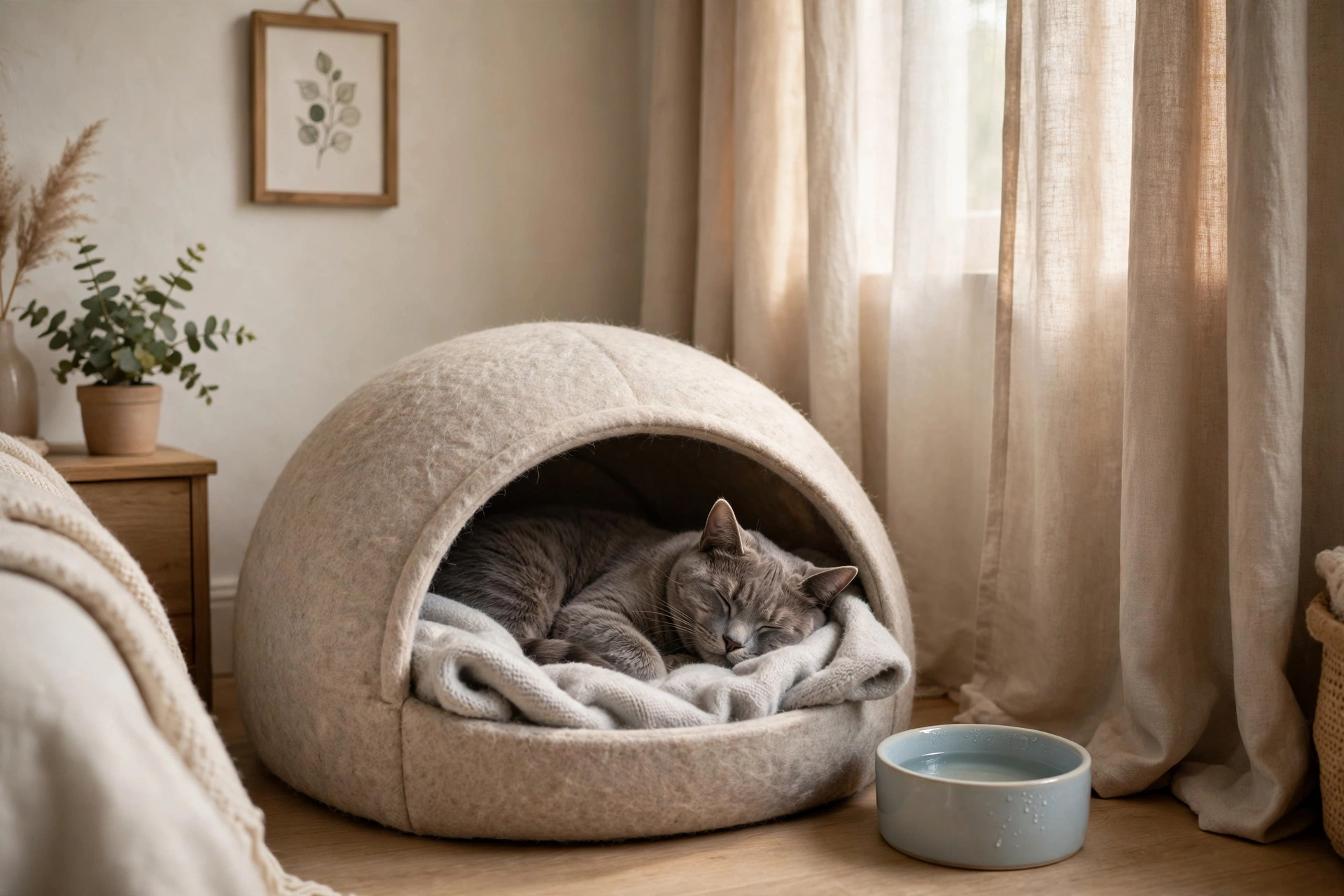
2. Set up a quiet retreat before the chaos starts
Pick one room — ideally one your cat already likes — and make it Halloween-proof before the first doorbell rings:
- Litter box, fresh water, and a comfortable hiding spot (a covered bed, a box with a blanket, or under-bed access).
- Close the windows and draw the curtains to muffle street noise.
- Put on low background sound: soft music or a TV at low volume masks doorbell bursts surprisingly well.
- A worn t-shirt of yours in the hiding spot adds a familiar scent.
The goal isn’t to lock your cat away as punishment — it’s to give them a predictable, controllable space while the rest of the house goes strange.
3. Tame the doorbell chaos with distraction
If your cat insists on staying near the action, give them something better to focus on than the door. A burst of play before trick-or-treat hours burns off nervous energy, and an engaging toy can hold attention through the doorbell marathon.
Self-play toys are ideal here because you can’t be the entertainment all evening — you’ll be answering the door. An interactive cat toy ball that moves on its own, or an automatic cat spinner toy, gives your cat a job to do that has nothing to do with the front door. Ten minutes of focused play before the rush starts can take the edge off the whole evening.
4. Candy is for humans only
Most owners know chocolate is toxic to cats (theobromine and caffeine), but Halloween brings extra risks:
- Sugar-free candy and gum often contain xylitol (birch sugar), which is extremely dangerous for pets even in small amounts.
- Raisins and raisin boxes handed out as “healthy” treats are toxic to cats.
- Wrappers and sticks — foil, cellophane, and lollipop sticks can cause choking or intestinal blockage if chewed.
Keep the candy bowl high, lidded, and far from curious paws. After trick-or-treating, do a floor sweep before letting your cat roam freely — dropped candy is the most common exposure route.
5. Audit your decorations for cat hazards
Walk through your decorations at cat height, not human height:
- Real candles in jack-o’-lanterns are the classic hazard — a swishing tail near an open flame. Battery LED candles give the same glow with zero risk.
- String lights and fake cobwebs invite chewing and tangling. Keep cords secured and out of reach.
- Small decorative pieces (mini pumpkins, plastic spiders, candy corn props) are chew-sized. If it fits in your cat’s mouth, assume it will end up there.
- Fog machines and scented plugins can irritate feline airways. Ventilate well or skip them in rooms your cat uses.
6. Costumes only with your cat’s consent
Some cats genuinely don’t mind a lightweight costume; most merely tolerate it; a few find it genuinely distressing. The test is simple: if your cat freezes, flattens, tries to bolt, or can’t walk normally, the costume comes off — no photo is worth that stress. Never use costumes with small detachable parts, tight elastic around the neck, or anything that covers the eyes or ears. And even the most easygoing cat shouldn’t wear a costume unsupervised.
7. Keep meals and water on schedule
Routine is a cat’s anchor, and Halloween night is exactly when routines slip. Feed at the normal time in the normal spot — in the retreat room if that’s where your cat has settled. An automatic smart feeder earns its keep on chaotic evenings: dinner arrives on time even if you’re mid-doorbell-rush, and the camera lets you check that your cat actually ate. Keep fresh water available too — stress can suppress drinking, so make it easy with a familiar, appealing source like a cat water fountain.
8. ID, microchip, and an escape plan
Even with every precaution, doors open. Make sure your cat’s collar (breakaway only) and ID tag are on, and that your microchip registration is up to date with your current phone number. Keep a recent photo on your phone — if the worst happens, you’ll need it immediately for lost-pet posts, not after an hour of scrolling.
9. Do a morning-after sweep
On November 1st, before your cat gets the full run of the house again:
- Pick up any dropped candy, wrappers, or glow-stick pieces (the liquid inside is bitter and irritating).
- Check the litter box area and favorite hiding spots for anything dragged in.
- Take down or secure floor-level decorations before the post-Halloween decompression nap.
Final thoughts
Halloween doesn’t have to be a bad night for your cat — it just needs to be a boring one. A quiet room, the normal dinner at the normal time, something fun to chase, and all the candy firmly on the human side of the equation. Plan it once, and next year it takes ten minutes.
Browse the toys, feeders, and fountains mentioned above in our shop — and have a safe, spooky season.